Mantra meditation means resting your attention lightly on a simple sound and letting that sound draw the mind down into rest, the way a weight on a fishing line draws the line down into deep water. You do not have to concentrate hard, and you do not have to understand the sound. Mantra comes from the word mind and the word tool. A tool for the mind.
 A free guide and videoMeditation Mythbusting, plus a gentle guided practice. Get it free below

What is mantra meditation?
A mantra is a simple sound you rest your attention on. There is a saying I heard attributed to India: you use a thorn to get out a thorn. A mantra is the same way. We are using the mind to free the mind, choosing something to lightly focus on, allowing that to be interesting, and then setting ourselves free to be effortless.
A mantra is 1 gateway among many. In the first lesson of our course I name a few of them: a mantra, or the rising and the falling of the breath, or a picture, or a prayer, or a wish, or the flickering flame of a candle. Whatever your chosen access is, we use the same quality of attention. (If you are new here, What Is Effortless Meditation? is the place to start.)
It is the attention you already give a good book, where you allow your concentration to be pulled. So we allow the mantra to be interesting.
How does a mantra work if it has no meaning?
In the style we teach, a mantra is a meaningless sound that lets the mind go on a little journey. It is not about the meaning of it. It is about the feeling of it.
Think about fishing. There is a weight at the end of the line, and a bobber at the top that suspends it. The mantra is like that weight on the fishing line. You drop the sound in, and it gradually helps your attention move down into the depth.
Daniela describes meditation as an ocean, with a surface, a middle and the depths, and that is what happens all by itself while you sit. Your awareness stays at the surface for a while, where it looks like planning and thinking. Then it moves down into a quieter, almost wordless space, where you lose track of how much time has passed. Then it comes back up. The mantra is how we drop back in.
Then awareness comes back up. Meditation moves down and up, the way sleep does.
How do I choose my own mantra?
Start with So Hum, or with a sound you already like. It is the feeling of the sound that matters.
So Hum is a universal mantra, and it is the one we teach in the course. A sound you already like works too: something you are already familiar with, a word or a phrase. And some mantras are given by a teacher. The Sahaj Samadhi meditation I learned on Sri Sri Ravi Shankar's silent retreats is mantra-based and learned through personal instruction.
In the description of his mantra masterclass, our friend and mentor Lorin Roche puts it simply: 'Discover the mantras that naturally speak to you.'
How to practice mantra meditation, step by step
Here is the So Hum practice as I guide it, in 6 steps.
- Shake, Settle, Face, Belly. Shake out the body for about 30 seconds, standing or seated. Then settle in, and welcome your face and your body.
- Let your breathing flow naturally. There's no need to control anything. The mind may be calm, the mind may be busy, and either one is fine.
- Think or listen for So Hum. It might be there when you breathe in and out. It might be separate from the breath.
- Let So Hum fade away, and let it come back. Let the thoughts come and go as well. It doesn't need to sound like anything in particular.
- When you notice you were thinking about something else, listen or feel for So Hum again.
- After a few minutes, release the practice and come back to the surface slowly, without any rush at all. Notice how your mind feels now.
Do I say the mantra out loud, or think it?
Think it, or listen for it, and repeat it a few times if you would like. That is how I guide it in the So Hum practice. It is okay if it fades into the background.
What is the golden thought?
'Oh wait a minute, where was I? I'm supposed to be meditating.' That is the golden thought. Let it be evidence that you were doing it right.
It means you just finished a cycle. When you sleep, you go into REM sleep, come back up to light sleep, maybe remember a dream, and then sleep some more. Meditation moves down and up the same way. When you come back to the surface, it sounds like planning or thinking. That is your cue to drop the mantra back in.
Is mantra meditation the same as Transcendental Meditation?
No. Transcendental Meditation is 1 specific mantra technique. According to tm.org, it is taught by certified teachers and uses a personalized mantra, repeated silently for 20 minutes, twice a day. Sahaj Samadhi, a meditation that comes from Sri Sri Ravi Shankar, is another mantra-based practice, taught through personal instruction at Art of Living centers.
Effortless Meditation uses a mantra as 1 gateway among several, alongside the breath and the small skills we share in the course. You can begin with So Hum on your own, a few minutes at a time, several times a day, and Daniela and I guide the full practice in Lesson 3 of the Effortless Meditation Course.
So drop the sound in, and let it sink like the weight on the line. How little can you do? How much can you allow?
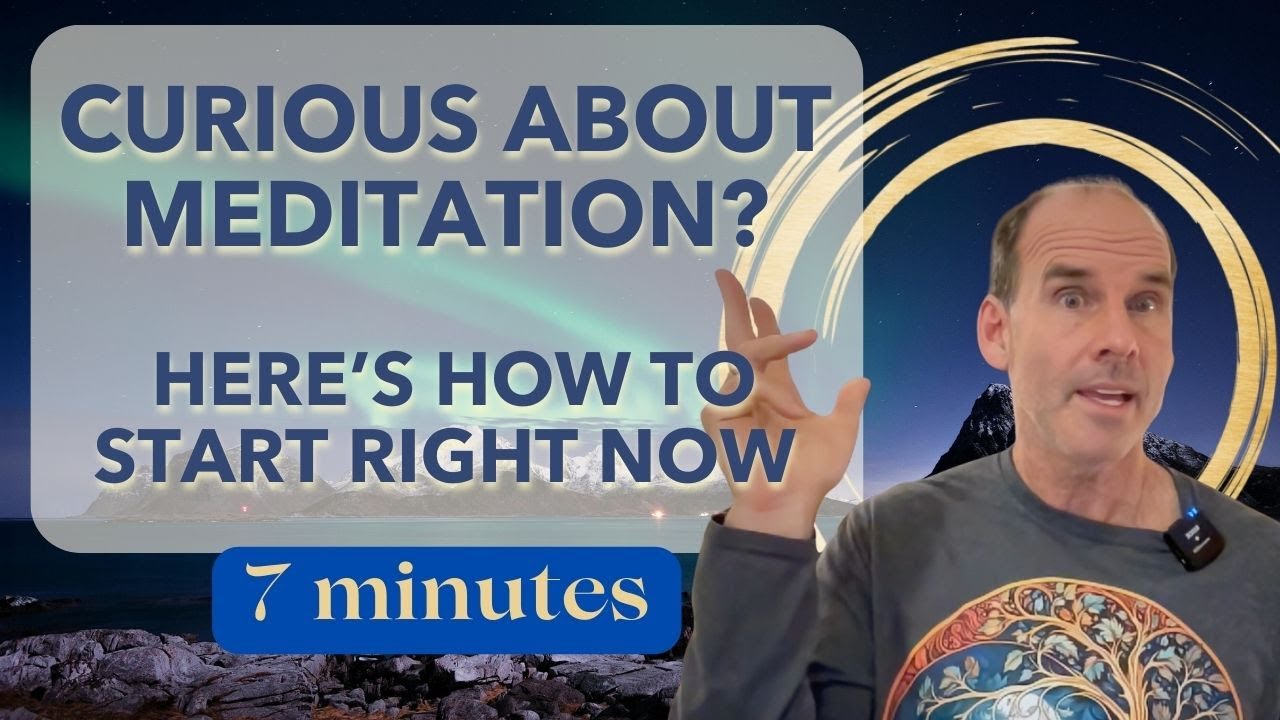
Watch: videos on this topic
Common questions about mantra meditation
What is a good mantra for beginners?
So Hum is a good place to start. It is a universal mantra, and it is the one Christopher Grant teaches in the Effortless Meditation course. You think or listen for it, let it fade, and let it come back, with no effort to hold on to it.
What does So Hum mean?
You can think of So Hum as meaning 'I am'. Christopher Grant calls it the sound of existence. In Effortless Meditation, what matters is the feeling of the sound as it draws your attention down.
Can a mantra be a word or phrase I already like?
Yes. In Effortless Meditation a mantra can be a sound you are already familiar with and like, a word or a phrase. Choose one that feels easy to return to. The feeling of the sound is what draws you in.
What if the mantra fades away?
That is part of the practice. Let the mantra fade away and let it come back. When you notice you have been thinking about something else, listen or feel for the mantra again, and let that moment count as meditation.
You can meditate. Start with the free guide and video.
- Meditation Mythbusting: 10 common myths, busted (PDF)
- Your First Effortless Meditation, a gentle guided practice (video)
Sources: Christopher's own teaching in the Effortless Meditation course and live workshop, lightly edited from the recordings. Lorin Roche's line is from the description of his mantra masterclass on lorinroche.com. Details of Transcendental Meditation are from tm.org, and of Sahaj Samadhi from artofliving.org.
Ready for the full path? See the Effortless Meditation Course, or browse the other articles.