I tried to meditate in college and just could not sit still. A couple of years later, I was in New York City, in the back room of the Caravan of Dreams in the East Village, and I walked out after 15 minutes. Everything I read told me the same thing. Quiet your mind, sit still, try harder. So I decided meditation just was not for me.
 A free guide and videoMeditation Mythbusting, plus a gentle guided practice. Get it free below
For years that was the whole story. I was the person who could not do it. If you have ever thought the same about yourself, I want you to hear this from someone who once believed it completely: the problem was never you.

What opened the door?
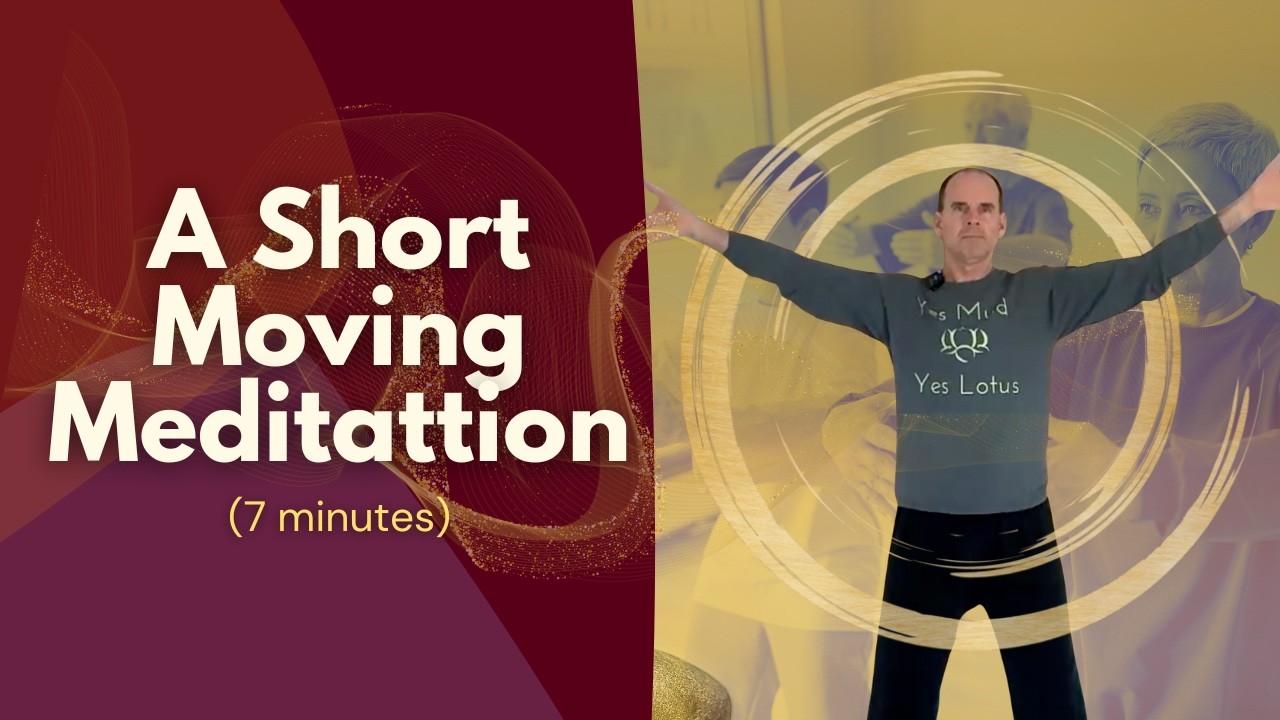
The day it finally opened was the day I stopped forcing stillness and came in through the body instead. Through movement, through breath, through the felt sense of being alive. The door that had been locked all those years was never actually locked. I had just been standing at the wrong one.
That is the whole of it, really. Most people who think they cannot meditate have only ever been shown one door, the one that says empty your mind and hold still, and when that door will not open they conclude the fault is theirs. It is not. There are simply other ways in.
So when we practice, we do not battle with the mind's thoughts. When we are doing our practices, we are constantly coming back to how good, how nice it feels to be breathed by the breath, and how nice it feels to feel the body's sensations. The physicality becomes the meditation. And here is a small thing I tell our students that changes a lot: when we are feeling, we are not thinking. When we are thinking, we are not feeling. You do not have to argue the mind into silence. You come into the body, and the settling happens on its own.
I teach the same thing from the other direction in Qigong, where rest is the seventh foundation and the one most often cut when a class runs long. Everything before it generates and moves energy. That last quiet stretch is where the body absorbs it. You cannot absorb something that is still in motion, and you cannot force the settling either. Those are the same lesson arriving from two sides.
The belief that kept me out
There is a belief underneath the whole struggle that I want to name, because it kept me out for years. It is often thought that meditation should be easy, because you are not doing anything. And yet every other significant skill in our life, playing a sport, learning to use a computer, working a job, becoming a surgeon, takes years of practice. Meditation is no different. It is working with our interior world, which is as complicated as the exterior world. So it makes sense that it would take some skills to explore, and to learn an approach that really serves you well.
That reframe took the shame out of it for me. I was not failing at something that should have been automatic. I was a beginner at a real skill, and beginners are allowed to learn.
2 small skills for a busy mind
The skills themselves are small and kind. One of the first we share is this. Imagine that you are going to see a movie, and you do not know what the movie is, or what it is called. You have not seen the trailer. A friend said, you have to come see this, it is good. So you sit down in the theater, the lights come down, you sit back and relax, and you wait for what is next without expectation. Treat the mind like that. Lean in with curiosity, and watch whatever rises on the movie screen of your mind. Do not even think of it as meditation. Just be curious.
Another one. Imagine that you threw a dinner party, and every aspect of yourself is invited. They come in costumes, the heroes and the villains, everybody is there. And whenever they show up at the door, you say, welcome, come on in, have a cup of tea. Nothing is turned away from the tea party. A busy mind, in this practice, is not a problem to solve. It is a room full of guests to welcome.
Is there 1 right way to meditate?
None of this is a claim that our way is the only way, or the best way. It is not a better than, or a different than. It is a recognition that what is commonly taught in yoga studios might only be one, or two, or three of the pathways in, and there are many, many more. If you have tried and it did not take, you were not standing in front of a wall. You were standing in front of one door among many.
So if you are struggling with how to begin meditation, or if meditation does not feel like the refuge it used to anymore, then perhaps there is a new door to knock on. That is why we teach this. Not because we found the door. Because someone finally showed me that the one I had given up on was never the only one, and I have wanted, ever since, to do that for the next person standing where I stood, ready to walk out after 15 minutes and call it quits for good.
The door was never locked. Come in through the body. We will show you how.
Come in through the body. When we are feeling, we are not thinking, and the settling happens on its own.
Watch: videos on this topic
Common questions
Why come into meditation through the body?
Because forcing the mind to be still is the door that never opens for many people, Christopher Grant among them. He could not meditate for years, until he stopped forcing stillness and came in through the body instead: through movement, through breath, through the felt sense of being alive.
Do you have to stop your thoughts to meditate?
No. In this approach you do not battle the mind's thoughts. You come back to how it feels to be breathed by the breath and to feel the body's sensations, and the settling happens on its own. When you are feeling, you are not thinking.
I cannot sit still or quiet my mind. Can I still meditate?
Yes. Most people who think they cannot meditate have only been shown one door, the one that says empty your mind and hold still. There are other ways in. If that door never opened for you, you were standing at one door among many.
Should meditation feel easy right away?
It is often thought meditation should be easy because you are not doing anything. Like any real skill, it takes a little practice. It is working with your interior world, which is as complex as the outer one, so a few small skills help you begin.
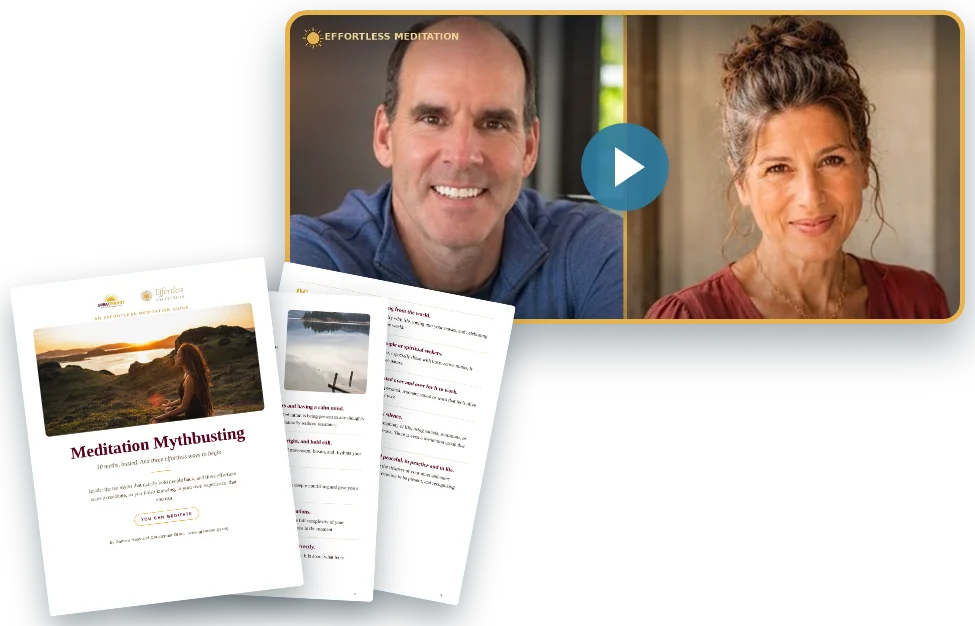
You can meditate. Start with the free guide and video.
- Meditation Mythbusting: 10 common myths, busted (PDF)
- Your First Effortless Meditation, a gentle guided practice (video)
Sources (Christopher, verbatim): Effortless Meditation Workshop promo, June 12, 2026 (the Caravan of Dreams); Healing Our Earth panel, International Day of Yoga, June 21, 2026 (feeling not thinking, meditation as a skill, the movie theater and dinner party micro-skills, a new door to knock on). Assembled from his spoken lines with light connective phrasing in his voice.
More than a guided course. A living practice you carry into everyday life. See the Effortless Meditation Course, or browse the other articles.